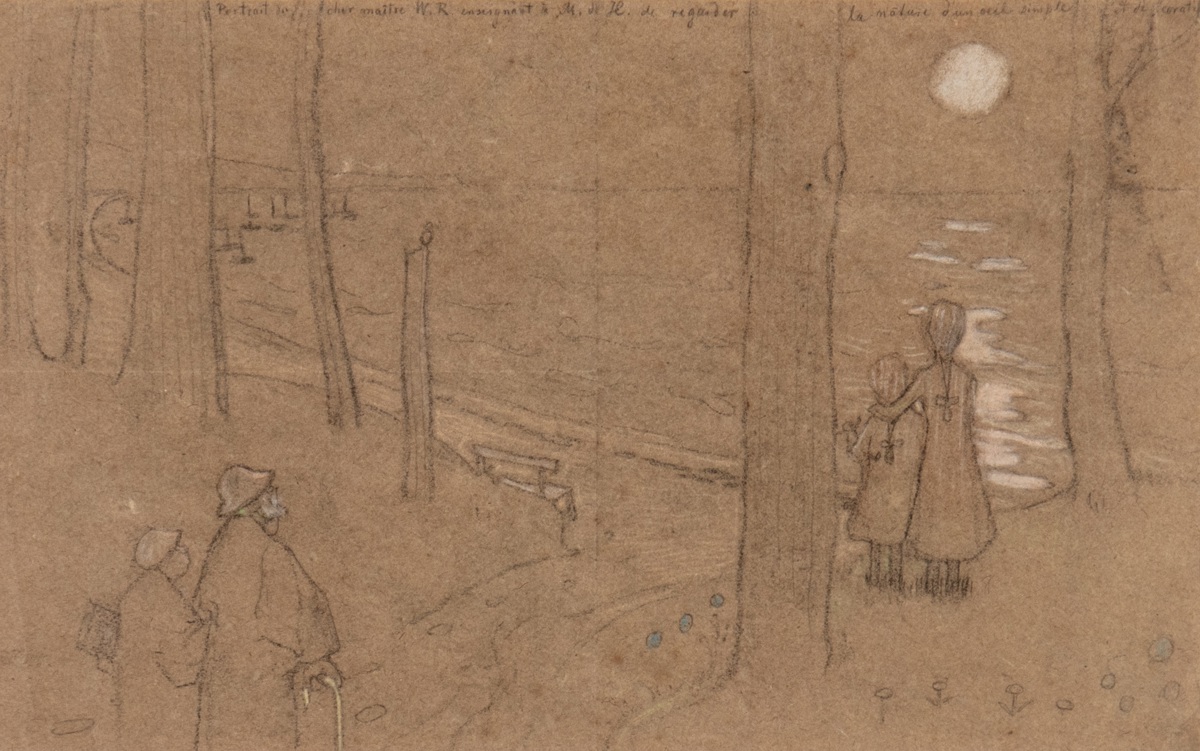
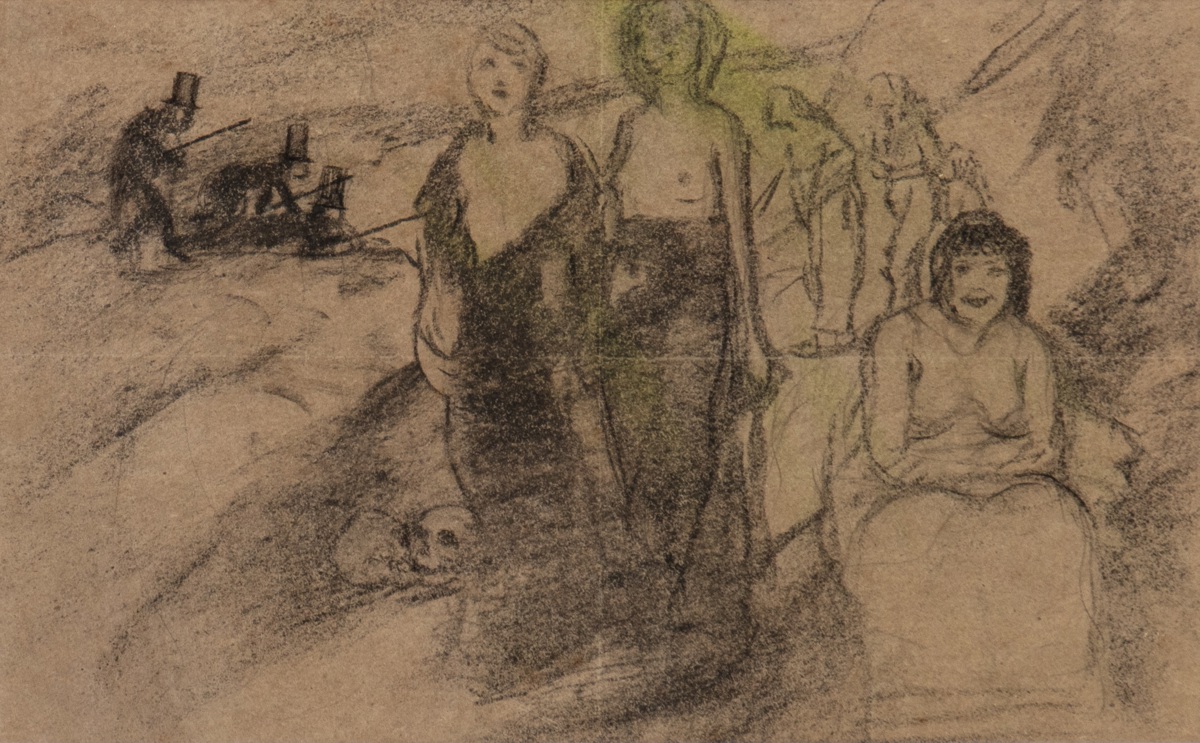
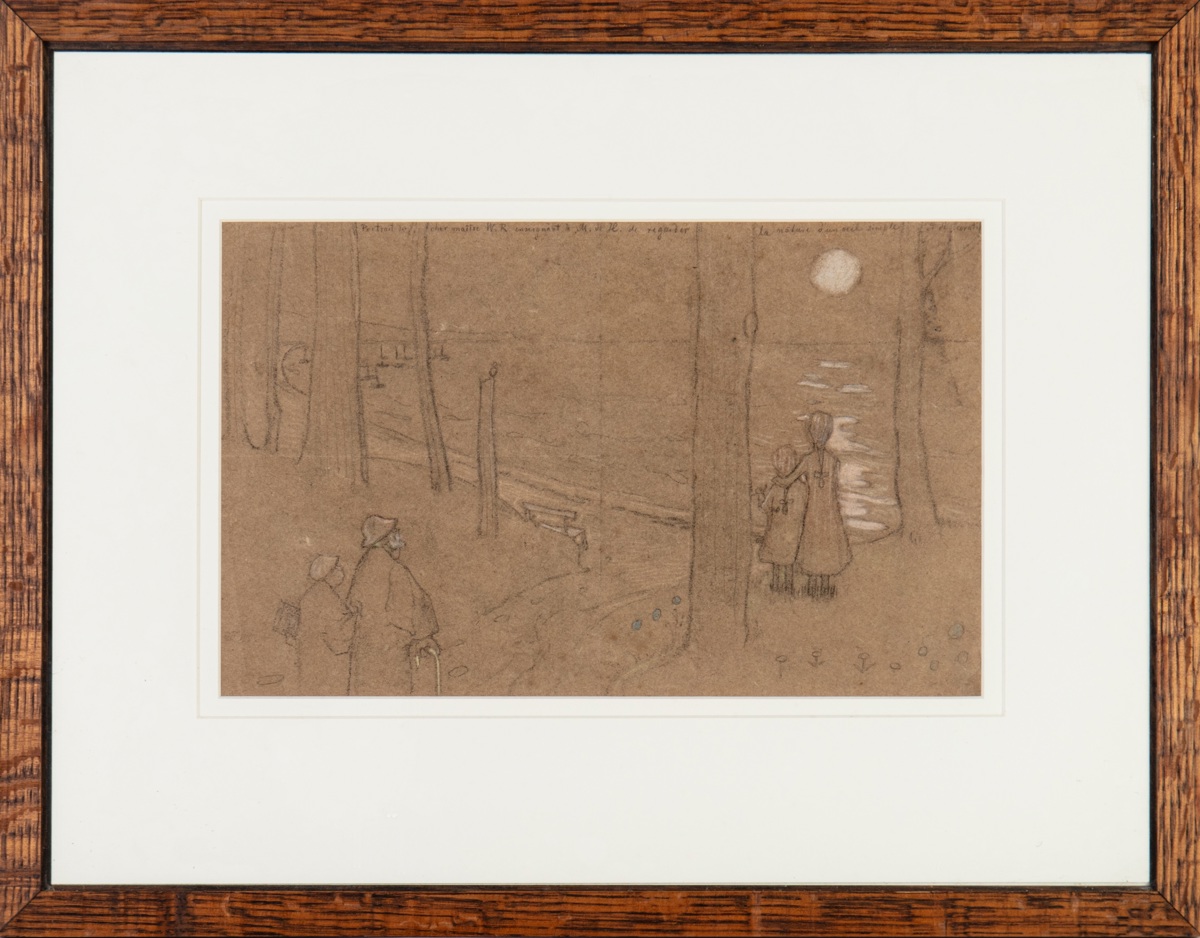
La Nature d'un Oeil Simple et Decoratif (Recto); Grave Diggers with Women in Procession (Verso) c. 1890s
Ludwig von Hofmann
* 1861 in Darmstadt † 1945 in Dresden
Charcoal and coloured chalks. Size of sheet: 22.5 x 36 cm.
Title and inscribed with a tribute to William Rothenstein: "Portrait de cher maitre W. R. enseignant à M. de H. De regarder la nature d'un oeil simple et decoratif" (recto). "M. de H." are the gallicised initials of the artist.
Provenance: Private collection, England.
£ 3,800. -
This double-sided drawing encapsulates the varied style of German artist Ludwig von Hofmann; from the delicate and decorative composition of the recto, reminiscent of early Nabis works by artists such as Maurice Denis (1870–1943), to the intriguing Symbolist vision of the verso.
In the elegant scene on the recto, the two young girls and older couple contemplating the moonlight that reflects on the water pay homage to von Hofmann’s friend and colleague Sir William Rothenstein (1872-1945), as the inscription above states; “Portrait of dear master W.R. teaching M. de H. to look at nature with a simple and decorative eye”. Nature was at the heart of Rothenstein’s aesthetic philosophy and he preached a “return to nature" as the key inspiration for artists, rather than other artists’ works. British born but of German origin, Rothenstein met von Hofmann in Paris in 1889 while they were both studying at the Académie Julian and they remained close friends throughout their lives.
The nightmarish scene on the verso shows two semi-dressed female figures with skulls at their feet and a seated woman with a disturbing grin across her face in the foreground. In the background there are three formally dressed men, perhaps grave diggers, appearing to spy on the figures arriving in procession from the distance. The scene may well be related to the symbolist drama The Assumption of little Hannele by Gerhart Hauptmann (1862-1946) which premiered in Berlin in 1893 and was published in 1894. Hauptmann was an intimate friend of von Hofmann. The artist made at least five other drawings with episodes from the play, all bearing similarly loose black chalk lines and drawn on the very similar size and type of brown paper as our sheet.